
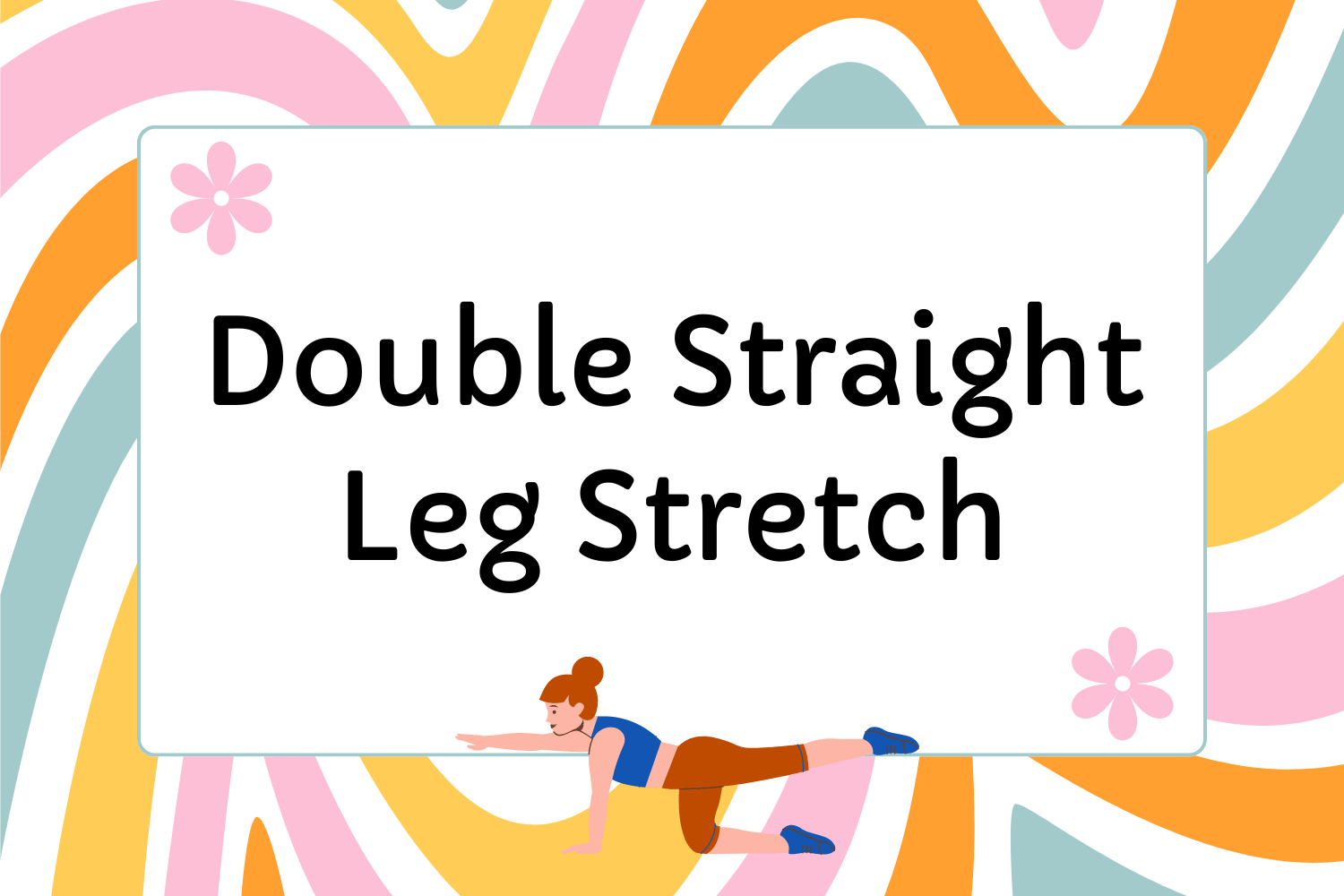

The double straight leg stretch, also called the lower lift or double leg lower lift, is the fourth exercise in the classical Pilates abdominal series. It strengthens the abdominals by asking them to control the weight of both straight legs. To do it, lie on your back, place your hands behind your head, curl your head and shoulders off the mat, and extend both legs toward the ceiling. Imprint your lower back gently toward the mat. Inhale as you slowly lower both legs toward the floor, only as far as your lower back stays supported, then exhale as you lift them back to vertical. Six to ten repetitions is typical. Bend your knees slightly to make it easier, and rest your head if your neck strains. The key is control on the way down, not how low the legs go.
Health note: This article is general information, not medical advice. Check with a doctor or physical therapist before starting Pilates if you have back or neck problems, osteoporosis, diastasis recti, are pregnant or postpartum, or are recovering from injury. Lowering both straight legs places significant load on the lower back and abdominal wall, and many people are advised to modify or avoid it. Ideally, learn exercises from a qualified instructor.
What the double straight leg stretch trains
Straight legs are long, heavy levers. As they lower toward the floor, their weight pulls on the pelvis and tries to arch the lower back. The abdominals, especially the deep layers and the lower portion of the rectus abdominis, must work hard to resist that pull and keep the spine supported. At the same time, the upper abdominals hold the head and shoulders in a curl. The hip flexors lift and lower the legs, and the inner thighs stay connected. The exercise builds significant abdominal strength and teaches you to keep the lower back stable under load, a skill that carries over to many other exercises.
Step by step
| Step | Key point |
|---|---|
| Set | Curl head and shoulders up, hands behind the head, legs to the ceiling |
| Imprint | Lengthen the lower back toward the mat |
| Inhale | Lower the legs slowly |
| Exhale | Lift them back to vertical |
| Repeat | 6 to 10 reps |
How to do the double straight leg stretch
- Lie on your back with your legs extended toward the ceiling, together, often in Pilates stance with the heels together and toes slightly apart.
- Place your hands behind your head, one on top of the other or fingers laced, with elbows wide.
- Exhale and curl your head, neck and shoulders off the mat, lifting to the base of the shoulder blades.
- Draw your abdominals in and imprint your lower back gently toward the mat.
- Inhale and lower both legs slowly toward the floor, keeping them straight and together.
- Stop at the point where you can still keep your lower back supported and still. For many people, this is around 45 to 60 degrees from the floor.
- Exhale and lift the legs back up toward vertical, keeping the upper body lifted.
- Repeat six to ten times, then bend the knees into your chest and lower your head to rest.
Range is set by your lower back
The lower your legs go, the harder the exercise becomes and the more strain it can place on the lower back. The correct range is not a fixed angle; it is the range in which your lower back stays supported and still. If you feel the back arch or lift away from the mat, you have gone too far. Stop higher on the next repetition. Many people get more benefit from a smaller range with perfect control than from a large range with a strained back.
Protecting the neck
The hands behind the head support its weight, but they should not pull it forward. Keep your elbows wide, in your peripheral vision, and let the abdominals hold the curl. Your gaze should be toward your legs or your navel, with space between your chin and chest. If your neck starts to ache, lower your head to the mat, rest and continue with the head down. Building abdominal strength over time will make the lifted position easier to hold.
Keeping the legs connected
Keeping the legs squeezed together, with the heels touching and the inner thighs connected, makes the legs feel like one unit and helps the pelvis stay stable. Rotating slightly from the hips into Pilates stance can make this connection easier to feel. Keep the legs long and energized from the hips through the toes, rather than letting the knees soften without intention. If your hamstrings are tight and the legs cannot reach vertical, that is fine; start from whatever angle feels comfortable and lower from there.
Breathing and tempo
The classical pattern is to inhale as the legs lower and exhale as they lift, with the exhale supporting the abdominal effort. Some instructors reverse this or use two counts down and one count up. Whichever pattern you use, lower slowly, taking at least a few seconds, and lift with control rather than swinging. The eccentric, lowering phase is where much of the strength is built.
Modifications
- Lower only a short distance, keeping the legs high.
- Bend the knees slightly to shorten the lever.
- Rest your head on the mat with hands by your sides.
- Place your hands under your sacrum (the flat bone at the base of the spine) for extra support if your instructor recommends it.
- Lower one leg at a time as a preparation.
- Do fewer repetitions with better control.
Where it fits in a Pilates session
In the classical mat order, the double straight leg stretch comes after the single straight leg stretch (scissors) and before the criss-cross, completing the series of five with those exercises and the single and double leg stretch. It is generally considered an intermediate exercise because of the load on the lower back. Many instructors teach modified versions first and progress students gradually.
How to progress
Start by lowering one leg at a time with the head down, then both legs a small distance. Next, add the head and shoulder lift for short sets. Gradually increase the range as your abdominals strengthen, always keeping the lower back supported. Slowing the lowering phase and adding a brief pause at the bottom are safer ways to add challenge than lowering the legs farther.
Common mistakes to avoid
- Arching the lower back as the legs lower.
- Lowering the legs too far for your strength.
- Pulling on the head with the hands.
- Closing the elbows around the face.
- Swinging the legs up with momentum.
- Letting the legs separate or the knees bend unintentionally.
- Holding the breath.
Frequently asked questions
Is the double straight leg stretch bad for your back?
It can strain the lower back if the legs lower beyond your control. Keep the range small enough that your back stays supported, and consult a professional if you have back problems.
What is the difference between the double leg stretch and the double straight leg stretch?
The double leg stretch reaches arms and legs out and circles back to a knee hug. The double straight leg stretch keeps the legs straight and lowers and lifts them together.
How low should my legs go?
Only as low as you can go while keeping your lower back supported and still. For many people, that is well above the floor.


